
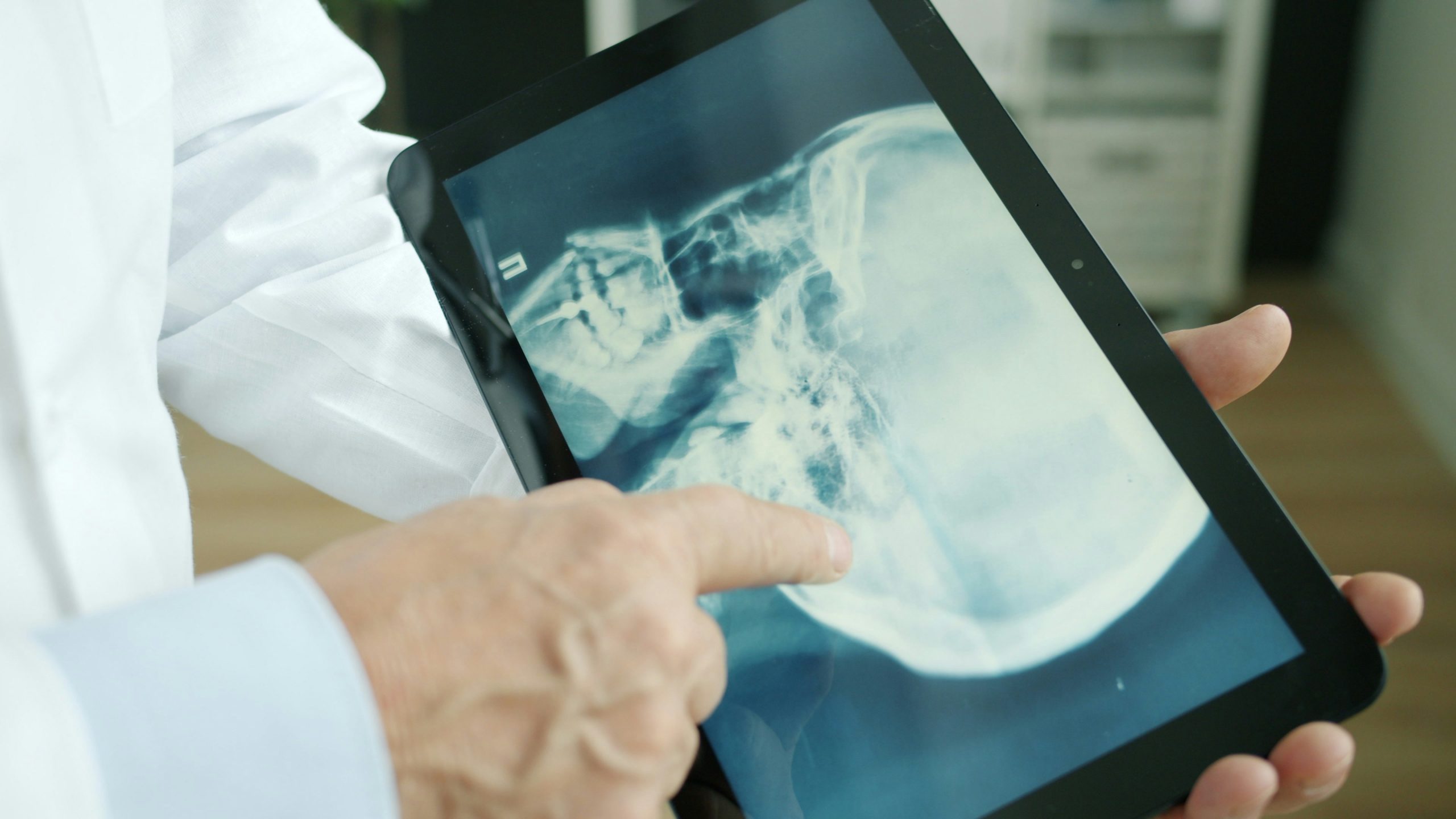
Take a moment to imagine how medical care might have been provided before X-Ray technology was invented. Doctors either made their best guess to fix your ailment by observing the outside of your body, or they could opt for surgery to see what was happening on the inside. Unfortunately, the grisly reality was that in the search to identify damage, more harm than good was often done. In 1895, a mere 130 years ago, physicist Wilhelm Conrad Röntgen was experimenting with cathode rays and stumbled upon the technology that could image bones and dense objects through flesh, tissue, and muscle. Since then, X-Rays have become a cornerstone for modern medicine. Besides identifying broken bones, dental cavities, and foreign objects in the body, X-Ray imaging is also used to detect heart conditions, lung diseases, and abdominal and skeletal problems. It even helps doctors find cancer.
Today, X-Ray technicians serve an enormously important role in delivering medical treatment to millions of people annually by providing billions of diagnostic imaging exams worldwide each year. If you’re seeking a meaningful career that can make a direct impact on medicine and in the lives of patients, becoming an X-Ray technician is an incredible choice.
Here, we will outline the steps that you can take to become an X-Ray technician in the United States and Connecticut.
What does an X-Ray technician do?
X-Ray technicians make the invisible, visible. They harness the diagnostic power to see inside the human body and provide images to doctors who can then make informed decisions about patient treatment. X-Ray technicians receive orders from physicians, prepare and position patients for scans, handle radiologic equipment, and capture diagnostic images. X-Ray technicians also help doctors determine whether the images are comprehensive by assessing them for clarity and legibility. Detecting poor scans early is important to avoid delaying diagnoses and re-ordering scans later.
Aside from becoming comfortable with operating a variety of imaging equipment, radiographers (like X-Ray technicians) must exercise strong patient care and communication skills. For example, they may conduct a verbal medical intake with patients, place the patient into the best position to capture the desired scan, administer a drink or IV that adds contrast and aids the physician in their search to identify the patient’s problem. It is important for X-Ray technicians to present a polished, caring bedside manner and have the ability to calm nervous patients.
Why become an X-Ray technician?
The demand for X-Ray technicians and technologists is increasing as the American population ages and requires increased health care services related to falls and other chronic diseases. One of the many reasons to become an X-Ray technician is to join a profession that is growing faster than average for all occupations in the US today. Radiologic and MRI technologists jobs are increasing at a rate of 5%, and the BLS predicts 15,400 job openings to become available every year over the next decade.
Radiologic technologists also earn about $77,000 annually, on average. And, depending on the environment and state in which they work, even higher earnings are possible.
What are the national requirements to become an X-Ray technician?
The steps to become an X-Ray technician include obtaining educational requirements, becoming certified, and learning workplace skills.
1. Obtain a college-level education.
The fundamentals of X-Ray technology are taught in specialized associate degree programs in Radiography. Some essential classes offered by these programs include:
- Anatomy and physiology
- Chemistry
- Imaging and exposure
- Patient care and ethics
- Radiographic procedures
- Safety for the radiographic professional
Most X-ray technician programs take about two years to complete. However, some X-Ray technicians choose to follow their associate degree with a bachelor’s in Health Science or other related degree, to increase their leadership and clinical skills and competitiveness in the job market.
Ready to get started? Discover Goodwin’s X-Ray Technician school!
2. Meet the certification requirements.
A person’s education in radiography from an accredited institution must be partnered with professional certification in order to become a licensed radiographer. While not all states require certification, it makes prospective X-Ray technicians much more desirable from a hiring standpoint.
The American Registry of Radiologic Technologists (ARRT) certification exam in radiography is the national standard certification. It is offered in a computer-based format. There are several eligibility pathways, including MRI, radiography, and sonography, among others. Passing the AART exam shows health care providers that you are certifiably able to provide safe and high-quality patient care, and it is the key to entry-level X-Ray technologist roles in environments such as hospitals, where 60% of X-Ray technologists work. X-Ray technologists might also find jobs at outpatient centers, private practice physicians’ offices, laboratories, or the federal government.
3. Master the necessary skills in X-Ray technology.
Radiologic technologists train to use multiple types of imaging tools. The tool and scanning technique may depend on the body part or area being scanned, as well as the reason for ordering the scan. For example, symptoms of a dislocated shoulder, accidental ingestion of a foreign object causing an intestinal blockage, and searching for clues about a suspicious growth in the breast tissue each require a unique approach.
Scanners that an X-Ray technician will become comfortable with throughout the course of their educational program, clinical rounds, and on-the-job experience include:
- X-Ray
- Computed tomography (CT) imaging
- Mammography or sonography
- Magnetic resonance imaging (MRI)
How to become an X-Ray technician in Connecticut
The health care sector is the fastest-growing industry in Connecticut, making this state a fantastic place to live and work as an X-Ray technician. There are a few simple steps that an aspiring radiologic technician should plan to take to secure this role.
- Learn by enrolling and completing an accredited Radiography program. Applicants will need to verify their official course of study by requesting that documentation be sent from their school to the state.
- Take and pass the certification exam. Join more than 360,000 radiographic technologists who are certified and registered by the American Registry of Radiologic Technologists (ARRT), on your way to becoming an X-Ray technician in Connecticut.
- Complete the application. Submit documentation, including a form and photo online, and pay the $200 application fee, to the Connecticut Department of Public Health, Radiographer Licensure office.
With these credentials in hand, radiographic technologists, including X-Ray technicians, can emerge with a competitive advantage when looking for jobs in hospitals, medical offices, outpatient care centers, and other similar health care environments.
See the full state requirements for becoming an X-Ray technician in Connecticut.
Become an X-Ray technician by learning at Goodwin University
Start your journey into the world of radiography with the Associate Degree in Radiography at Goodwin University. You can earn 80 credits in as few as 20-24 months part-time, and learn everything you’ll need to know to be prepared for the certification exam, and get ready for an X-Ray technician job.
Visit Goodwin University’s Associate Degree in Radiography requirements for full details about applying and eligibility, and to get started today!
Goodwin University is a nonprofit institution of higher education and is accredited by the New England Commission of Higher Education (NECHE), formerly known as the New England Association of Schools and Colleges (NEASC). Goodwin University was founded in 1999, with the goal of serving a diverse student population with career-focused degree programs that lead to strong employment outcomes.