
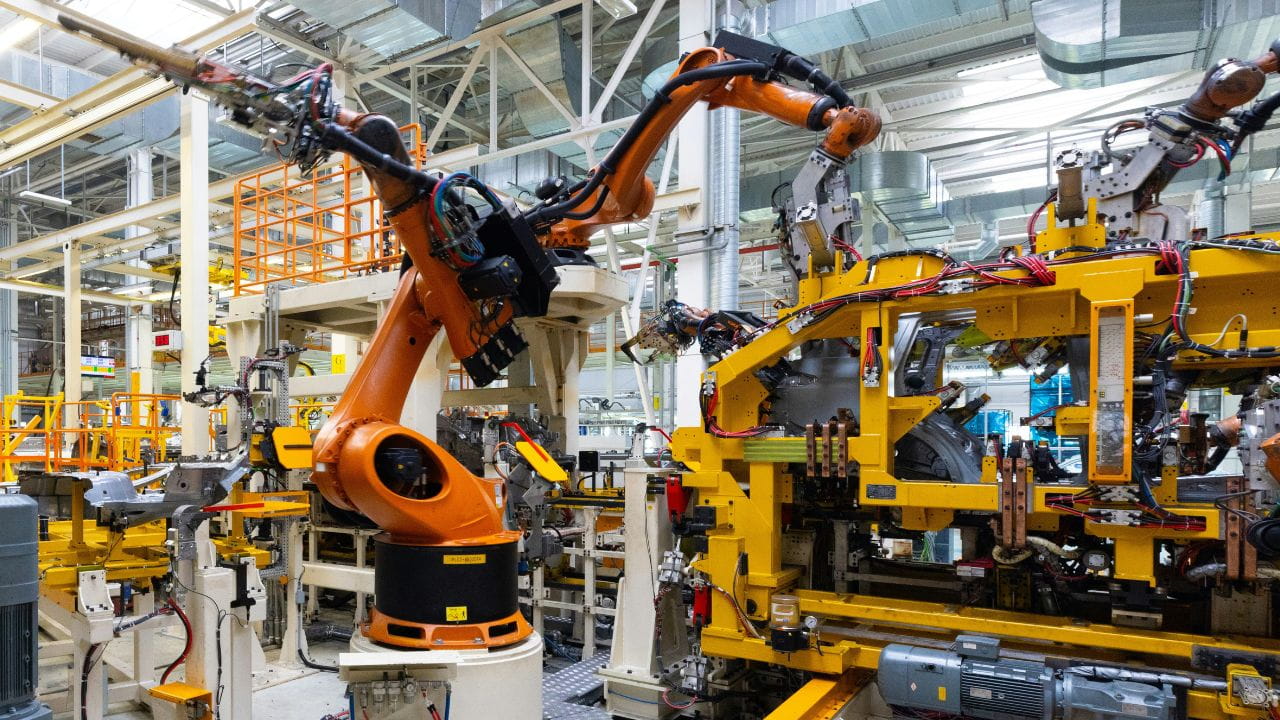
As we consider the manufacturing career paths available today, there are two in-demand fields that sound closely related: metrology and manufacturing engineering technology (MET). Both are incredibly high-tech. Both are hands-on. And both are essential to the modern industrial world.
However, there are key differences between what they teach, how they’re structured, and how they prepare students for the workforce. If you are trying to understand the differences between manufacturing engineering technology vs. metrology, and weighing out which degree to pursue, you are in the right place.
This guide will break down the differences between these two exciting fields of study and help you decide on the best educational pathway for your interests and goals.
What is metrology?
At its most basic level, metrology is the scientific study of measurement. (Note: measurement is critical in manufacturing.) In manufacturing, the smallest error can lead to broken machines, lost time, and wasted money. If an airplane part is just a millimeter too thin, it could cause significant consequences.
Metrology technicians are the quality assurance teams of manufacturing — the experts who stand between a perfectly-measured product and a useless paperweight. These technicians use highly calibrated tools to inspect, test, and measure parts to ensure they match the original engineering designs.
If you have a sharp eye for detail and love getting hands-on with your work, metrology could be an incredible career path.
Metrology education requirements
Breaking into metrology will look different school-to-school. At Goodwin, students can pursue an accelerated certificate in CNC Machining, Metrology, and Manufacturing Technology. This certificate program is designed for students who want to fast-track their career in manufacturing. They can complete the full-time certificate program in about five months.
Students learn the ins and outs of computer numerical control (CNC) machining, calibration, and practical measurement. Plus, as a certificate program, it is the perfect choice for students who want to gain targeted, highly specialized skills and enter the workforce as quickly as possible.
Learn about the accelerated Metrology certificate at Goodwin
What is manufacturing engineering technology (MET)?
While metrology focuses on the individual parts of a whole, manufacturing engineering technology (MET) focuses on the big picture of how that product is made. MET is an applied engineering field focused on improving manufacturing systems.
Professionals in this field design better processes, implement smart automation, and find ways to make production faster, safer, and more cost-effective. Instead of just checking a single part, MET professionals look at the entire factory floor. They troubleshoot robots, design parts on computers, and streamline supply chains.
Manufacturing engineering technology educational path
Typically, manufacturing engineering technology is offered as a comprehensive Associate of Science (AS) degree. An associate degree takes a bit longer to complete than a certificate program and provides a broader, deeper educational foundation.
The MET program at Goodwin, for example, requires 61 credits and allows you to tailor your education to your specific interests by choosing one of three exciting concentrations:
- Computer-aided design (CAD): Learn to design 2D and 3D parts using industry-standard software.
- Mechatronics: Blend your mechanical and electrical skills with some computer expertise to handle the hardest problems in factory machines.
- Robotics and automation: Focus on programming and maintaining the smart robots that run modern assembly lines.
Take a deeper look into MET at Goodwin University
Manufacturing engineering technology vs. metrology: Key differences
Now that we’ve explored the purpose and practice of each field, let’s compare manufacturing engineering technology vs. metrology directly.
Scope of work
Metrology is one of the most highly focused branches of engineering. It is all about ensuring that a single, tiny part meets extremely strict standards. Otherwise, entire machines can fall apart. Meanwhile, MET is much broader. It covers designing the systems and processes that actually make parts metrologists need.
Program structure
The metrology track is typically a postsecondary certificate program meant to get you working in a matter of months. The manufacturing engineering technology track is an associate degree program that takes a bit longer, but offers specialized concentrations and a broader engineering foundation.
Career pathways
Metrology graduates often pursue roles as:
- Calibration technicians
- CNC machinists
- Metrology technicians
- Quality assurance inspectors
MET graduates often pursue roles as:
- CAD drafters
- Industrial service technicians
- Mechanical engineering technologists
- Robotics and automation technicians
Why manufacturing needs both skillsets
Modern smart factories cannot function without both MET professionals and metrology experts working side by side. Despite advances in technology and engineering, factories still need people in every corner.
For example, let’s say there’s a factory making advanced stethoscopes. A manufacturing engineering technology graduate would operate the robotic assembly line that assembles those little tools. They program the machines to build the devices quickly and safely.
However, machines can drift out of sync over time. Like regular tools, those machines don’t last forever under daily wear and tear. That is when the metrologist steps in. They would use delicate equipment to test and troubleshoot, recalibrating the robots on the assembly line to bring them back up to snuff.
They rely on each other. One builds the process, and the other guarantees the perfection of the result.
Metrology vs. manufacturing engineering technology: Which path is right for you?
Choosing the right program ultimately comes down to your personal goals and how you like to work. Do you love using high-tech tools? Does the idea of fixing robots sound cool? Are you detail-oriented and ready to start your career fast? If so, a certificate in Metrology is your best bet.
You may prefer solving more conceptual, bigger problems at the heart of the assembly line. Are you interested in architecture and keeping systems running smoothly? Do you want the perks of a full associate degree? If that sounds more your speed, the Manufacturing Engineering Technology degree is the way to go.
Start your manufacturing career at Goodwin
No matter the path you choose, the industry needs the expertise you can offer. Across aerospace, medicine, and power tools, people need parts to be made. Otherwise, nobody makes them, and nothing gets done. So, the next step is to find a school that supports you.
At Goodwin University, you will find the flexibility, expert faculty, and state-of-the-art equipment you need to succeed in either field. With open enrollment, financial aid options, and dedicated career placement services, there has never been a better time to start.
If you’re ready to build the future, take the next step and learn more about Goodwin University’s manufacturing programs today.
Take on Manufacturing Engineering Technology or Metrology at Goodwin University.
Goodwin University is a nonprofit institution of higher education and is accredited by the New England Commission of Higher Education (NECHE), formerly known as the New England Association of Schools and Colleges (NEASC). Goodwin University was founded in 1999, with the goal of serving a diverse student population with career-focused degree programs that lead to strong employment outcomes.