
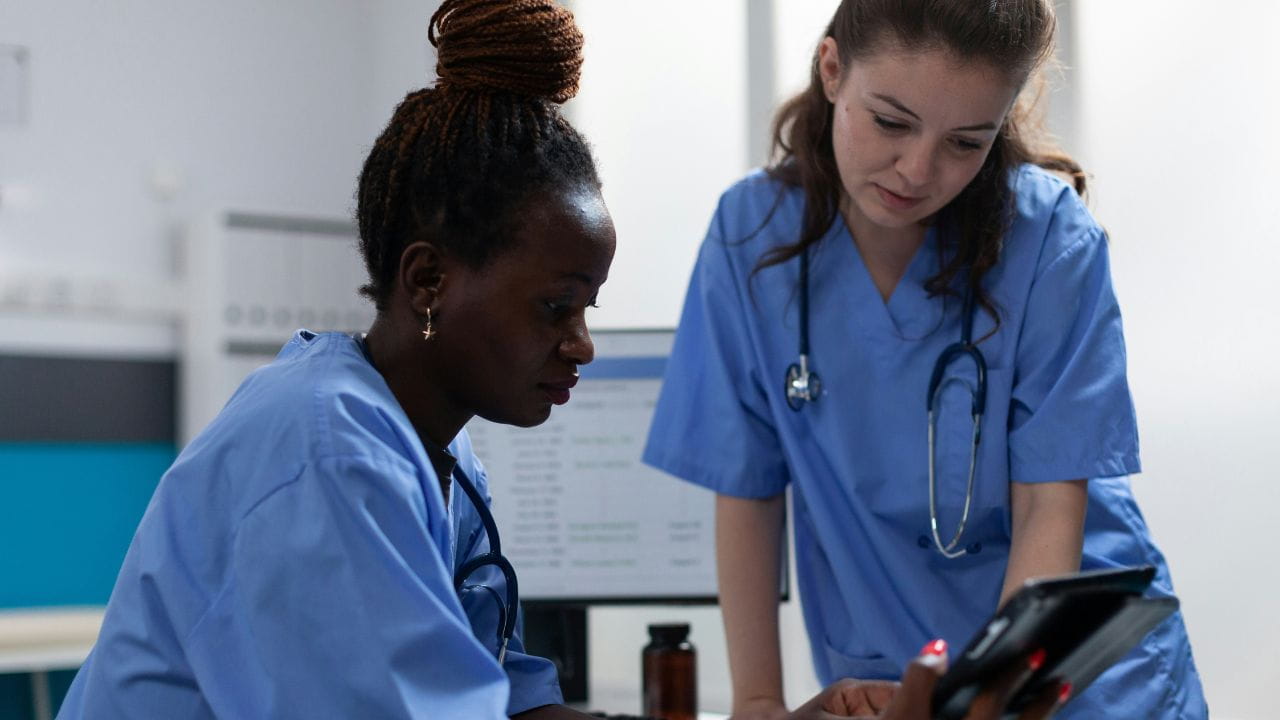
Graduating from nursing school is a major milestone, so first up, congratulations are in order. Well done! It’s also when the predictability of school starts to disintegrate, and you’re looking at the reality of working in healthcare.
Rather than panic, it’s time to start asking practical, pressing questions. What are the most important steps after nursing school? When should you start applying for jobs? After your nursing degree, what’s next?
Rest assured, being unsure about what to do after nursing school is common; you’re not alone. The following guide walks you through the process step by step so you can move deliberately from completing your ADN program to licensure, employment, and long-term career planning.
Let’s begin!
Step 1: Evaluate your clinical experience
An often overlooked step after nursing school is taking a moment to analyze how far you’ve come and the experiences you’ve already amassed. Your experience in required clinicals for your degree can offer valuable insight into specialty areas you may prefer, patient populations you enjoy working with, and care environments that suit you best.
Ask yourself:
- Which units or settings did I enjoy the most?
- Where did I feel confident and engaged?
- What environments were overwhelming or misaligned with my career goals?
Your answers to these questions can help narrow your job search and shape stronger applications and cover letters. If you’re still unsure where you’ll fit best into the nursing landscape, look for hospitals and jobs that offer new graduate or nurse residency programs, which often last six to eight months and provide structured support as you transition from recent graduate to practicing nurse.
Step 2: Build or refine your nursing resume
Another essential answer to the question, “What to do after nursing school?” is polishing up that resume. Make sure you include:
- All relevant certifications (even those you’re working on currently)
- Any previous healthcare experience (such as CNA or PCT)
- Clinical rotations from your training
- Leadership, volunteer, or teamwork experience
It’s common for nursing students to work in healthcare settings as CNAs or PCTs during school to get a foot in the door. Even part-time experience helps build connections, secure references, and sometimes even line up a job offer before graduation.
Step 3: Request recommendation letters before graduation
One of the smartest steps after nursing school is to snag a few stellar recommendation letters from your favorite professors.
Not sure where to start? Request letters from:
- Clinical instructors
- Nursing faculty familiar with your performance
- Supervisors from any previous healthcare roles
Start early — professors receive a ton of last-minute requests. Having a recent, thoughtful recommendation letter is a powerful asset for applying to jobs and/or graduate programs. Don’t underestimate this step!
Build your healthcare career at Goodwin!
Step 4: Prepare for and pass the NCLEX-RN
You’re not officially a nurse until you pass the NCLEX-RN, but you can apply for jobs before you take it. The majority of employers will require you to pass the exam within six months of graduation, or the job offer could be revoked.
A few helpful NCLEX prep tips include:
- Create a strict study schedule
- Prep with classmates to stay accountable
- Study on a computer, since the exam is computer-based
Passing the NCLEX-RN exam is an imperative step post-graduation, as it unlocks licensure (next up!) and employment opportunities.
Step 5: Apply for state licensure (and plan for processing time)
An NCLEX pass is almost the finish line, but not quite. Now it’s time to apply for licensure in your state. This can take an annoying amount of time (timelines vary by state) because bureaucracy is, well, slow. So keep on top of timelines and stay organized to avoid delays on your end.
Some nurses also benefit from multi-state licensure through the Nursing Licensure Compact (NLC), allowing nurses to practice in multiple states under one license. This is especially helpful if you want to explore travel nursing as a career option.
Step 6: Put your network to work!
Listen, it’s no one’s favorite word, but networking… works. While job boards are helpful, many positions are filled through referrals and professional connections. There’s simply nothing better than a face-to-face connection.
But as most of this is done online these days, a few of our favorite networking tools and platforms include:
- LinkedIn and Indeed
- Nurse-specific platforms such as NurseGrid
- Professional organizations such as the American Nurses Association (ANA)
- Student alumni networks
Exploring these online platforms and connecting with working nurses can offer insight into workplace culture, career pathways, and unposted openings, especially valuable as you begin to interview to find the perfect position.
Step 7: Approach nursing interviews as a two-way street
When interviewing, never forget you’re interviewing them too. Nurses are in high demand, so make sure you’re active in finding one that will support your growth and well-being. Make sure you ask questions about:
- Nurse-to-patient ratios
- Professional development and advancement opportunities
- Unit culture and leadership support
Demonstrating curiosity and confidence lets the interviewer know that you are serious about long-term success, a crucial mindset when considering what’s next after your nursing degree.
Step 8: Perhaps more school is the next right move?
Many nursing students know from the get-go that they’ll have more than one graduation. You might choose to find a part-time RN position to gain experience while pursuing advanced education or specialist certifications to expand your scope.
Goodwin offers several potent pathways for nurses looking to advance into APRN or leadership roles, such as:
- Family Nurse Practitioner (FNP-APRN)
- Psychiatric Mental Health Nurse Practitioner (PMHNP-APRN)
- Master’s in Public Health (MPH)
Further education increases your nursing autonomy, builds specialization, and increases your earning potential. Perhaps it’s exactly what to do after nursing school, if you’re thinking long-term.
How Goodwin supports your steps after nursing school
Graduation may feel like the end, but it’s truly the beginning of your career. Following these essential steps after nursing school should help you move forward with confidence and purpose.
Still deciding what to do after nursing school? Perhaps exploring educational pathways at Goodwin could help. Learn more about the healthcare programs at Goodwin University to see what the next right move is for you!
Goodwin University is a nonprofit institution of higher education and is accredited by the New England Commission of Higher Education (NECHE), formerly known as the New England Association of Schools and Colleges (NEASC). Goodwin University was founded in 1999, with the goal of serving a diverse student population with career-focused degree programs that lead to strong employment outcomes.