
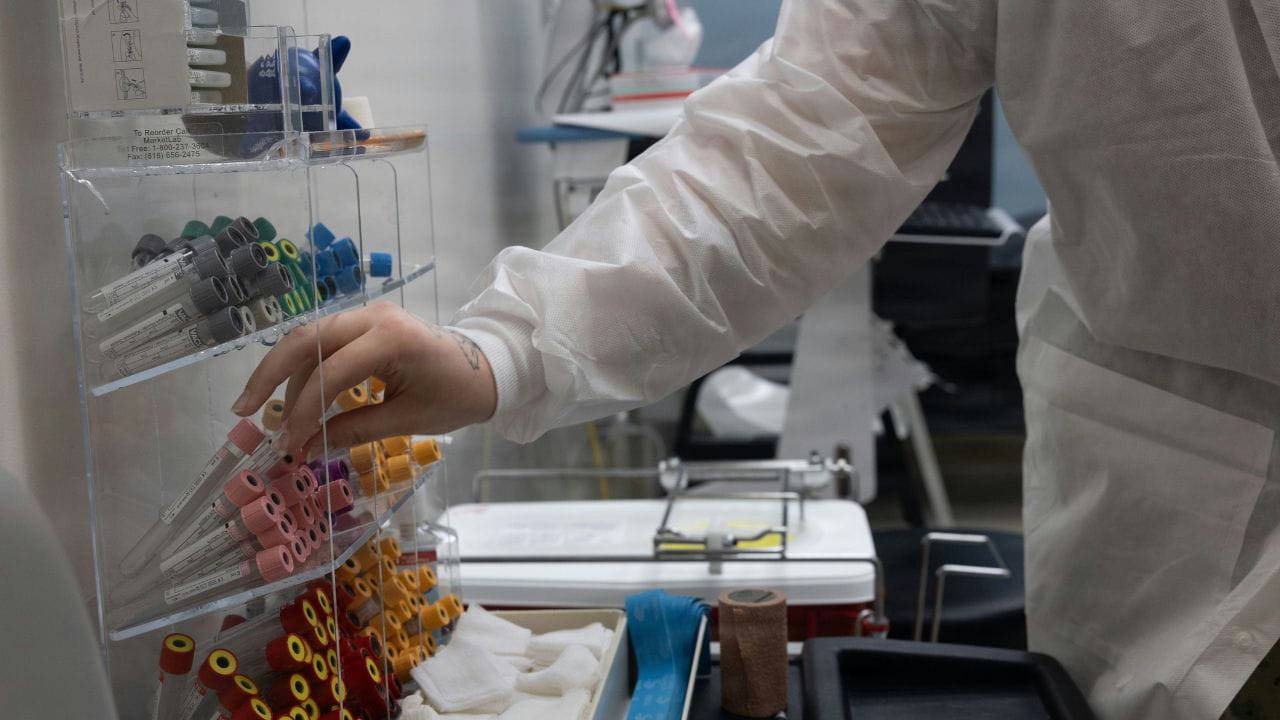
Every day, medical decisions are made based on laboratory results. These tests, such as your common bloodwork panel, help to inform diagnoses, dosages, surgeries, and ongoing care. You can see how much importance they carry. Patient care often cannot begin without the work of laboratory professionals, such as phlebotomists.
Phlebotomists sit at the intersection of patients and providers. They conduct testing and collect blood samples that are then passed along to medical practitioners. However, the role of the phlebotomist goes well beyond drawing blood.
If you’re interested in becoming a behind-the-scenes healthcare hero, or seeking a medical career that you can land quickly, phlebotomy might be the perfect path. Of course, before rolling up your sleeves and diving into the field, it’s important to understand exactly what phlebotomists do.
Let’s explore the core responsibilities of a phlebotomist below.
What is a phlebotomist?
A phlebotomist is a trained laboratory technician who collects blood samples from patients, either for donation, laboratory testing, or transfusions. These samples may then be used by physicians to treat patients, make diagnoses, and monitor certain medical conditions.
Phlebotomists are skilled experts in venipuncture, which is the process of locating and piercing a vein to draw blood. This is the core of their job description, but phlebotomists may also use other methods, such as dermal puncture or artery collection, in their day-to-day careers.
And this isn’t all that phlebotomists do. Remember that blood comes from patients, and phlebotomists must interact with these patients every day. So, in addition to drawing blood, phlebotomists must ensure patient safety and comfort, as well as a safe and hygienic laboratory setting.
Where do phlebotomists work?
Phlebotomists work under the supervision of a medical laboratory scientist, but act as the primary contact for patients entering the lab or testing clinic. Being that bloodwork is needed in all corners of medicine, phlebotomists can find work in a diversity of environments.
Common places where phlebotomists work include, but are not limited to:
- Blood donation centers
- Diagnostic laboratories
- Emergency departments
- Hospitals
- Medical clinics
- Insurance companies
- Nursing homes
- Outpatient laboratories
- Physician’s offices
Learn how Goodwin can help you enter the field of phlebotomy, fast!
Core responsibilities of a phlebotomist
When we say that phlebotomy is more than “just drawing blood,” we mean it. Phlebotomists are responsible for a blend of clinical and technical procedures, as well as patient interaction and administrative duties. Below, we break down exactly what phlebotomists do on a day-to-day basis.
Primary job duties
- Draw blood safely and accurately, using venipuncture, finger prick, and heel stick methods
- Explain procedures to patients throughout their visit, helping them to feel calm and comfortable (many patients can be anxious!)
- Follow strict hygiene and infection-control protocols
- Prepare blood samples for testing and transportation, so that labs can deliver reliable results
- Verify patient identities and label blood samples to prevent errors
Patient care duties
- Calm and work patiently with those who may be afraid of needles and blood
- Communicate procedures to patients and explain any aftercare needs
- Monitor patients for adverse reactions and dizziness during/after procedures
- Provide compassionate and professional care
Clinical responsibilities
- Operate and maintain laboratory equipment safely
- Properly handle lab specimens in compliance with infection control standards
- Sanitize equipment and the work area
- Safeguard the integrity of blood samples, as diagnoses and medications will depend on proper collection and accurate results
Administrative duties
- Maintain and update patient records with details regarding blood tests
- Manage laboratory inventory and order supplies as needed
Required skills for a phlebotomy career
To become a phlebotomist, there are some basic requirements. For example, you have to be okay working with needles and blood. But beyond the obvious, there are several other skills that you will need to fulfill a phlebotomy career. These include:
- Communication skills: Phlebotomists interact with patients the minute they walk through the door. As such, their communication and interpersonal skills must be strong. Phlebotomists must be able to explain procedures to patients in a calm and professional way, as well as ease nerves and make patients feel comfortable with what’s going on.
- Compassion: Getting blood drawn is not always comfortable, and many patients will be doing this for different reasons. Some might be facing chronic medical conditions, while others might be receiving routine care. It’s important to be sensitive to patients’ needs, their comfort levels, and ensure they have the most pleasant experience possible.
- Dexterity: Phlebotomists work with their hands, and therefore must have good hand-eye coordination and the ability to stay calm under pressure. Phlebotomists must work well and efficiently with small needles and equipment, and stay focused on each patient, one at a time. Phlebotomists see a lot of patients a day, so staying focused could mean a matter of keeping patients safe and avoiding cross-contamination.
- Sanitation and hygiene: Medicine relies on accurate and clean laboratory results. As such, phlebotomists must ensure that every step they take complies with safety standards, infection control protocols, and laboratory best practices. Attention to detail, specifically as it pertains to safety and sanitation, is an essential skill required in this role.
- Technical phlebotomy skills: Of course, some of the most important skills are those that are technical in nature: Phlebotomists must know how to collect venous and capillary specimens effectively, perform basic laboratory testing, and demonstrate knowledge of proper labeling, storage, and transportation of blood samples.
Why become a phlebotomist (and how to do so!)
In case you missed it, here’s the TL;DR: Phlebotomists are often the starting point of patient care. Most medical decisions begin with bloodwork, whether that’s diagnosing an illness, evaluating the effectiveness of a medication, or determining whether a patient is in good health. Many people are drawn to this profession because of the importance it carries.
And did we mention, the path to becoming a phlebotomist is also fast? As explained by the Bureau of Labor Statistics, phlebotomists only need a postsecondary certificate to get started in this profession. This certificate is a non-degree award, earned at the college level, that provides students with fundamental knowledge in venipuncture, infection control, patient care, and more. At Goodwin University, the Phlebotomy certificate program can be completed in just 15 weeks.
For those who are interested in mastering phlebotomy, but also expanding their career horizons, Goodwin also offers a Patient Care Associate (PCA) certificate program. Students gain advanced phlebotomy training as well as nursing assistant (CNA) training and electrocardiogram (EKG) practice, in just three short semesters.
Interested in learning more?
Goodwin University is a leading healthcare school with many options to master the field of phlebotomy. Through our hands-on, career-focused training programs, you can prepare to become a phlebotomist, patient care technician, CNA, medical assistant, or other healthcare support professional.
Request more information today by visiting us online!
Goodwin University is a nonprofit institution of higher education and is accredited by the New England Commission of Higher Education (NECHE), formerly known as the New England Association of Schools and Colleges (NEASC). Goodwin University was founded in 1999, with the goal of serving a diverse student population with career-focused degree programs that lead to strong employment outcomes.