
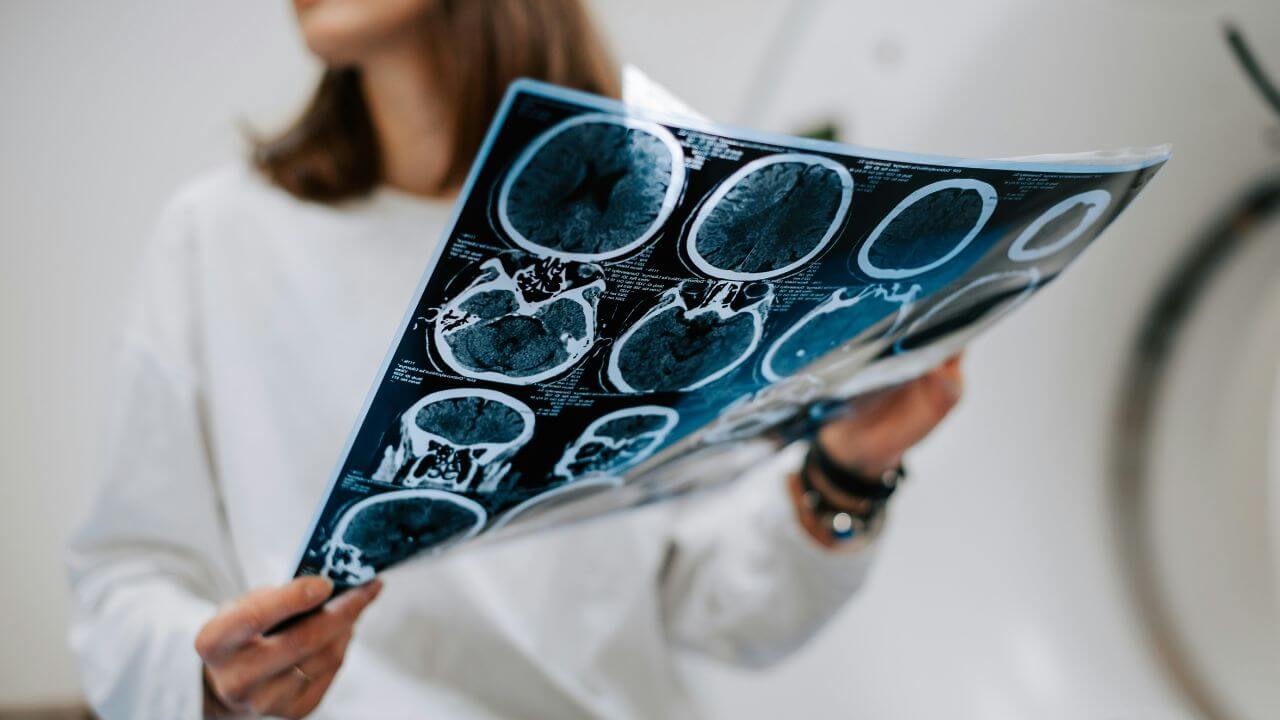
A Radiologic Technology degree, commonly known as a Radiography degree, is an undergraduate degree that prepares students to become specialists in diagnostic imaging equipment — think, x-rays, MRIs, CT scans, and more. These degree programs, offered at the associate and bachelor’s degree level, cover the ins and outs of anatomy, patient care, radiation safety, medical imaging, and more.
At the culmination of a Radiography program, students can go on to pursue meaningful careers as radiologic technologists. However, this is a broad career title; there are many types of radiologic technologists, with a variety of specialties.
If you’re interested in a career that’s critical for medical diagnoses, a career where you can work with patients and stay on the forefront of technology, read on. Below, we’ll explore what you can do with a Radiologic Technology degree and how you can launch a career you love in just a couple of years.
Popular careers with a Radiologic Technology degree:
1. X-ray technician
X-ray technicians are some of the most important and common professionals you’ll come across in medical imaging. Using X-ray machines, these technicians take diagnostic images of bones, organs, and tissues to help physicians identify injuries, abnormalities, and medical conditions. X-ray techs work directly with patients, too, positioning them for accurate image capture while also ensuring their safety.
2. CT technologist
CT stands for computed tomography, a specialized type of scan that takes detailed, cross-sectional images of the body. CT technologists specialize in this equipment, positioning patients for CT scans and sending images to practitioners for evaluation and diagnosis. Due to their level of detail, CT scans are often used for assessing trauma-related injuries, identifying tumors, monitoring cancer, identifying joint and bone issues, as well as uncovering internal conditions like pneumonia, blood clots, heart disease, brain bleeds, and more. As such, CT technologists play a critical role in the vast field of medicine, helping to guide treatments for patients in vital need.
3. MRI technologist
MRI technologists specialize in magnetic resonance imaging (MRI), a type of medical equipment that is used to produce highly detailed images without radiation. Instead, MRI machines use powerful magnets to capture diagnostic images. In addition to properly positioning patients for MRIs, these technologists will also inject patients with contrast agents (such as dyes) to ensure images show up on their scanner. The MRIs are then used to diagnose issues with bones, joints, organs, soft tissues, and other internal systems.
4. Mammographer
Mammographers are radiologic technologists who specialize in taking medical images of the breasts in order to detect breast cancer early. Mammograms, the type of scan taken, are a specific type of X-ray. They are performed regularly for older women, but can be painful or sensitive for patients. As such, mammographers must be strong communicators, emotionally sensitive, and aware of radiation safety standards, so that they can properly help patients through a stressful or difficult procedure. These professionals typically work in women’s health environments, but may also work in outpatient imaging centers.
5. Sonographer (i.e. ultrasound tech)
Sonographers, also known as ultrasound technicians, use ultrasound technology to capture images of organs, blood flow, and pregnancies. Rather than using radiation, ultrasounds use high-frequency sound waves to create real-time images of internal conditions and systems. Therefore, sonographers must know how to operate a transducer wand (which sends sound waves to the body) and capture still pictures of moving systems, for diagnosis and monitoring. Ultrasound technicians very often work with pregnant patients, but may also help in medical settings to guide biopsies, detect abdominal conditions, assess blood flow and arteries, and more.
Launch a career you love through Goodwin’s Radiography degree program.
Where you can work with a Radiography degree:
Radiologic technologists are needed at every corner of healthcare: in hospitals, outpatient clinics, physicians’ offices, imaging centers, medical laboratories, research facilities, and more. According to the Bureau of Labor Statistics, most radiologic technologists work in the following environments:
- Federal government agencies
- Hospitals
- Medical and diagnostic laboratories
- Offices of physicians
- Outpatient care centers
Work schedules depend on the work environment. In hospitals, for example, radiologic technologists may be required for occasional weekend, evening, or overnight shifts. Meanwhile, in doctors’ offices, technologists will typically work within normal office hours (9 to 5).
Of course, radiologic technologists are not limited to these workplaces. Like many healthcare professions, there are many opportunities for growth within this field. Radiologic technologists may go on to receive specialty certifications or continue their education into other, related healthcare fields.
How to launch a radiography career quickly
To secure a career in the above professions and work environments, you will need at least an associate degree in Radiologic Technology or Radiography. This degree can be completed within a couple of years, making it an accessible and efficient option for those looking to make an impact in medicine right away.
And, for those looking to get started as soon as possible, Goodwin University offers multiple class starts per year!
Once you earn your Radiography degree, you will be ready to sit for your certification exam, administered by the American Registry of Radiologic Technologists (ARRT). Successful completion of this exam will qualify you for many of the careers above. However, certain states also require licensure (depending on your career choice), so be sure to check your state’s requirements for any additional licensing steps.
If you live in Connecticut and are eager to get started, Goodwin University is here. Goodwin is a highly reputable and flexible healthcare school in CT, with a comprehensive Radiologic Technology program designed to meet employers’ needs.
Learn more today!
Goodwin University is a nonprofit institution of higher education and is accredited by the New England Commission of Higher Education (NECHE), formerly known as the New England Association of Schools and Colleges (NEASC). Goodwin University was founded in 1999, with the goal of serving a diverse student population with career-focused degree programs that lead to strong employment outcomes.