
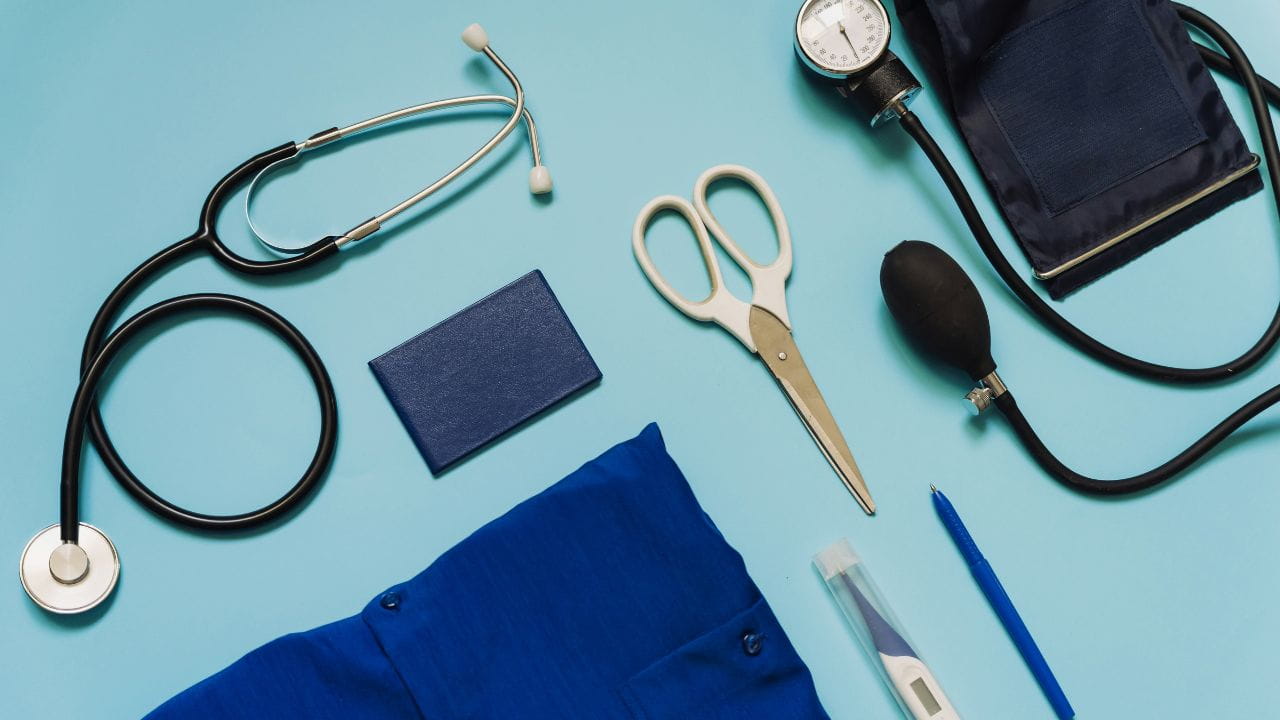
Patient care technicians, also known as patient care assistants or associates (PCAs), are essential members of the broader healthcare team. As their title implies, these professionals spend their workdays tending to patients in need. They provide fundamental and functional care to ensure patients are safe, comfortable, and supported throughout their visit, whether in hospitals, clinics, or long-term care environments.
If you’re interested in making an impact in health and medicine, becoming a patient care assistant is a great place to start. Patient care assistants can complete their education, training, and certification requirements in approximately one year, making this profession both accessible and meaningful for those just starting out.
Now, you may be wondering, “What exactly does it take to become a PCA or PCT?” Furthermore, what does a postsecondary education entail for aspiring caregivers?
We’ve got all these details covered, and more. Read on to see what goes into a PCA/PCT training program, and which specific patient care technician classes can set you up for success in your career.
Patient care technician training overview
Patient care technicians are well-versed and well-rounded specialists. They not only know how to make patients feel comfortable, safe, and validated, but they also are capable of carrying out very technical medical tasks. For this reason, patient care technician classes must be multidisciplinary, touching on each aspect of the role.
At Goodwin University, the Patient Care Associate training program is comprised of three semesters, each targeting different focal areas and needs within the profession:
- Semester 1 commences with patient care training, specifically preparing students for CNA certification. Students learn how to provide basic care for patients in need, including monitoring vital signs and assisting with daily living activities. Upon completion of this semester, students are eligible to take the Certified Nursing Assistant (CNA) exam, enabling them to get started in a caring career well before graduation day.
- Semester 2 dives deep into more technical aspects of the PCA/PCT role. Students build foundational skills in phlebotomy (blood collection) and learn how to perform and read electrocardiograms (EKGs). It’s this semester that begins to separate PCA/PCT students from nursing assistants and aides.
- Semester 3 is designed to hone all the skills previously learned in the Patient Care Associate program. Students advance their skills in phlebotomy and EKGs, learning advanced techniques and putting them into practice during a final internship. At the end of this semester, students are well-prepared for careers in patient care, with versatile skillsets that can translate to a number of healthcare settings.
Every Patient Care Technician training program is unique, so be sure to do your research and find a curriculum that aligns with your interests, goals, and expectations. At Goodwin, we ensure that PCA students receive a healthy blend of hands-on and classroom learning experiences, so that they can build real-world skills prior to graduation day.
Learn more about our Patient Care Associate training program here!
Ready to dive deep into the specific classes needed to become a patient care technician? See the required classes at Goodwin University below.
On-campus patient care classes
1. Nursing Assistant Skills
While part of the Patient Care Associate program, this course builds the core knowledge and clinical skills required to work as a certified nursing assistant (CNA). These skills are essential for success in patient care, and therefore an important baseline for the PCA/PCT role. In this class, students learn how to safely and compassionately assist patients with activities of daily living, such as bathing, dressing, and feeding. Students also learn how to take and record vital signs, maintain patient safety and comfort, communicate with care teams, and follow infection control policies.
2. Principles and Practice of Phlebotomy
In this patient care technician course, students learn all about the theory and basic techniques of phlebotomy (i.e., blood specimen collection). They cover the basics of venipuncture and capillary puncture methods, as well as infection control and safety, patient identification and communication, proper specimen handling and labeling, and use of phlebotomy equipment. Students also practice these skills in lab settings to prepare for clinical application.
3. Electrocardiogram (EKG) Practices
This patient care assisting course gives students their first exposure to electrocardiograms, more commonly known as EKGs. Students develop the foundational skills used to perform EKGs and record results. They learn how to prepare patients for testing, place leads, operate machinery safely, and obtain accurate tracings. Students also learn the key concepts behind these tests, studying topics like cardiac anatomy and physiology.
4. Advanced Electrocardiogram Practices
Becoming a patient care technician or assistant is more than just basic care. It also involves developing skills that set you apart. This PCT class does just this, building on students’ EKG skills with more complex cardiac monitoring techniques. Students learn how to examine and interpret a wider range of cardiac rhythms, understand abnormal results, and troubleshoot any challenges that arise. Ultimately, this class helps enhance the accuracy of EKGs and technicians’ overall confidence in a range of clinical and patient scenarios.
5. Advanced Phlebotomy Techniques
Similar to the class above, the Advanced Phlebotomy course is designed to expand students’ knowledge and skillsets in a highly demanded field. Students learn about more specialized techniques in venipuncture and refine their skills right within the class. They learn how to navigate challenges that might arise in phlebotomy, such as difficult veins, and how to ensure a safe and clean environment for blood collection.
Hands-on learning experiences for PCA/PCT students
While classroom learning is vital to the success of patient care technicians, it’s the application and practice of these classes that make a great patient care professional. And, it’s for this reason that hands-on, clinical training should always be a focus of any PCA/PCT curriculum.
At Goodwin University, for example, PCA students participate in three separate internship experiences. These are completed over the course of three semesters, allowing students to put their learned skills to practice in real-world medical settings. They get the unique opportunity to learn under the direction of nurses, nursing assistants, phlebotomists, EKG technicians, and other patient care professionals, as well as gain exposure to different patients and cases along the way.
The Patient Care Associate certificate program has one primary goal in mind: To prepare students with the knowledge, confidence, and career-ready experience they need to thrive in patient care. The combined classroom and clinical training is meant to do just this, giving students versatile and in-demand skillsets through one comprehensive curriculum. Upon completion, students are prepared to sit for relevant certification exams and step directly into the healthcare workforce.
Are you ready to make a difference in the lives of patients? Get the practical training and classroom learning you need to build a successful career. Learn more about our Patient Care Associate training program online, here, today.
Goodwin University is a nonprofit institution of higher education and is accredited by the New England Commission of Higher Education (NECHE), formerly known as the New England Association of Schools and Colleges (NEASC). Goodwin University was founded in 1999, with the goal of serving a diverse student population with career-focused degree programs that lead to strong employment outcomes.